


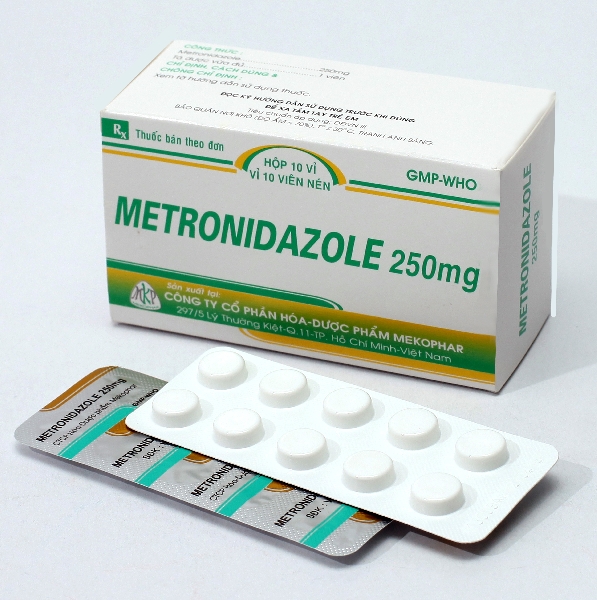
Metronidazole 250mg
Indications
– Trichomonas infestation of the urogenital tract.
– Amebic dysentery, amebic liver abscess.
– Nonspecific vaginitis.
– Infestation by Giardia lamblia, Dracunculus medinensis.
– Stomatitis ulcerosa, rosacea.
– Treatment of local or generalized anaerobic bacterial infections.
– Prevention of postoperative bacterial infections by anaerobic flora (biliary tract, appendix) and after gynecologic operations.
– Treatment of Helicobacter pylori infection in patients with duodenal and gastric ulcers.
Present
Blister of 10 tablets. Box of 10 blisters.
Composition
Metronidazole………………………………………………………………………………………………250mg
Excipients sq. for ……………………………………………………………………………………..1 tablet.
(Povidone, Lactose, Maize starch, Sodium starch glycolate, Talc, Magnesium stearate).
Pharmacology
Metronidazole is a synthetic nitroimidazole derivative antibacterial agent that is effective against wide range of anaerobic bacteria and protozoa.
Pharmacokinetics
– Metronidazole is rapidly and completely absorbed following an oral administration, peak plasma concentration of approximately 10mg/ml is
attained 1 hour after a 500mg dose
– Metronidazole is less than 20% bound to plasma protein. Metronidazole is widely distributed into most body tissues and fluids including bile, liver and liver abscess, cerebro– spinal fluid, saliva, seminal fluid, vaginal secretions in a level that is approximate to the plasma concentration.
– Metronidazole readily crosses the placenta and is distributed into milk.
– Metronidazole is metabolized in the liver by hydroxylation and side chain oxidation. The major metabolite may retain some antibacterial and
antiprotozoal activity. The half life of plasma metronidazole is about 8 hours.
The major part of a metronidazole dose is excreted in urine, mainly as metabolites, a small amount is excreted in feces.
Contra-Indications
– Hypersensitivity to nitroimidazole derivative or any of the ingredients of the drug.
– The first trimester of pregnancy.
Side effect
– Gastro– intestinal disturbances including nausea, vomiting, an unpleasant metallic taste, diarrhea…
– Rare: agranulocytosis, blister, pruritus, headache, epilepsy and urine may become dark or reddish– brown in color.
Inform your doctor about side– effects when using this medicine.
Precaution
– Discontinue the medication if dizziness, incoordination or abnormal psychiatric symptoms occurred during metronidazole therapy.
– It may aggravate neurological condition in patients with CNS or peripheral nervous system disorders, stabilized or progressing.
– Monitoring total and differential white blood cells is advisable in patients with history of blood dyscrasias or those on high doses or prolonged therapy.
– The dosage should be reduced in patients with severe liver dysfunction.
– Caution should be exercised when the drug is given to pregnant women at the last two trimesters or nursing mothers.
– Do not consume alcohol or alcoholic beverage during the medication.
– Metronidazole may cause dizziness, convulsion therefore people that are driving or operating machinery should be cautioned while taking the drug.
Interaction
Concomitant use of Metronidazole with :
– Disulfiram : may be associated with acute psychoses and confusion.
– Alcohol : may be associated with Disulfiram– like reaction (flushing, headache, nausea, vomiting, abdominal cramps,…).
– Wafarin & the anticoagulant agents: Metronidazole enhances the anticoagulant effect.
– Phenytoin, Phenobarbital: these drugs decrease plasma concentrations of Metronidazole.
– Cimetidine : increases plasma concentrations of Metronidazole.
– Lithium, Ciclosporin: these drugs increase plasma concentrations of these drugs.
– 5– fluouracil: Metronidazole may increase 5– fluouracil toxicity due to decreased plasma clearance of the latter.
* Laboratory test interactions: Metronidazole may immobilize spirochetes therefore it may interfere with Nelson’s TPI test.
OVERDOSAGE :
– Single overdose of 15 g of Metronidazole was reported. The symptoms include nausea, vomiting and incoordination. The neurotoxic symptoms
include convulsion, peripheral neuropathy were reported 5 to 7 days following 6 to 10.4 g of Metronidazole once every two days.
– Treatment : there is no specific treatment of overdose. The management is symptomatic and supportive.
Shelf life
36 months from the manufacturing date.
Storage
Store in a dry place (RH ≤ 70%), not exceeding 30oC. Protect from light.
Dosage
The tablets should be taken during or after meals.
Dosage:
* Amebiasis : For the 5, 10– day regimen.
– Adults : 6– 9 tablets/24 hrs in 3 divided doses.
– Children : 35– 50mg/kg/24 hrs in 3 divided doses.
* Trichomoniasis of genital tract : The sexual partner should also be treated.
There are 3 dosage regimens:
– One– day treatment: 8 tablets as single dose by mouth, at night before going to bed.
– Seven– day course of treatment: 1 tablet x 3 times daily by mouth for 7 days.
– Ten– day course of treatment: Males, as well as females, are administered each morning and each night 1 tablet orally for 10 days. At the same time, females should take 1 vaginal preparation every night before going to bed.
* Giardiasis :
– Adults: 2g once daily for 3 days or 1 tablet x 3 times/day for 5– 7 days.
– Children: 7.5mg/kg, every 8 hours.
* Helicobacter pylori infection :
500mg x 3 times daily, in combination with other antimicrobials
(Clarithromycin or Amoxicillin), and either bismuth compounds or proton pump inhibitors.
* Prevention of postoperative infections : 20– 30mg/kg daily in 3 divided doses, usually together with a beta– lactam or an aminoglycoside antibacterial.


Reviews
There are no reviews yet.